A Season for Future Success: Planting
By Winemaker Ben Mayo
Le Vigne Winery is planting grapes and investing in the future of our winery and craft. The foundation of any successful vineyard begins with how the vines themselves are propagated. One option is to purchase second-year plants, commonly called “uber vines.” These are rootstock vines grafted with a fruiting scion and raised in a nursery for two years. Uber vines can begin producing fruit about one year after planting. The second option uses grafted rootstock and scion material raised in the nursery for one year. After roughly three years in the ground, these vines can produce a small crop. The third and most common method is to propagate vines from pruning canes. Soon after winter pruning, canes are collected and trimmed to five or six buds. Two buds are buried to develop roots, while the remaining buds above ground form the cordon and leaf-bearing shoots. This method can take up to six years for the vine to reach the wire and another two years before producing a meaningful crop.
Le Vigne has chosen the third method for planting. Using wood from our existing vineyard helps maintain continuity in the fruit profile while reducing costs. Although the root systems take longer to establish, they ultimately become stronger and can produce fruit for a longer lifespan.
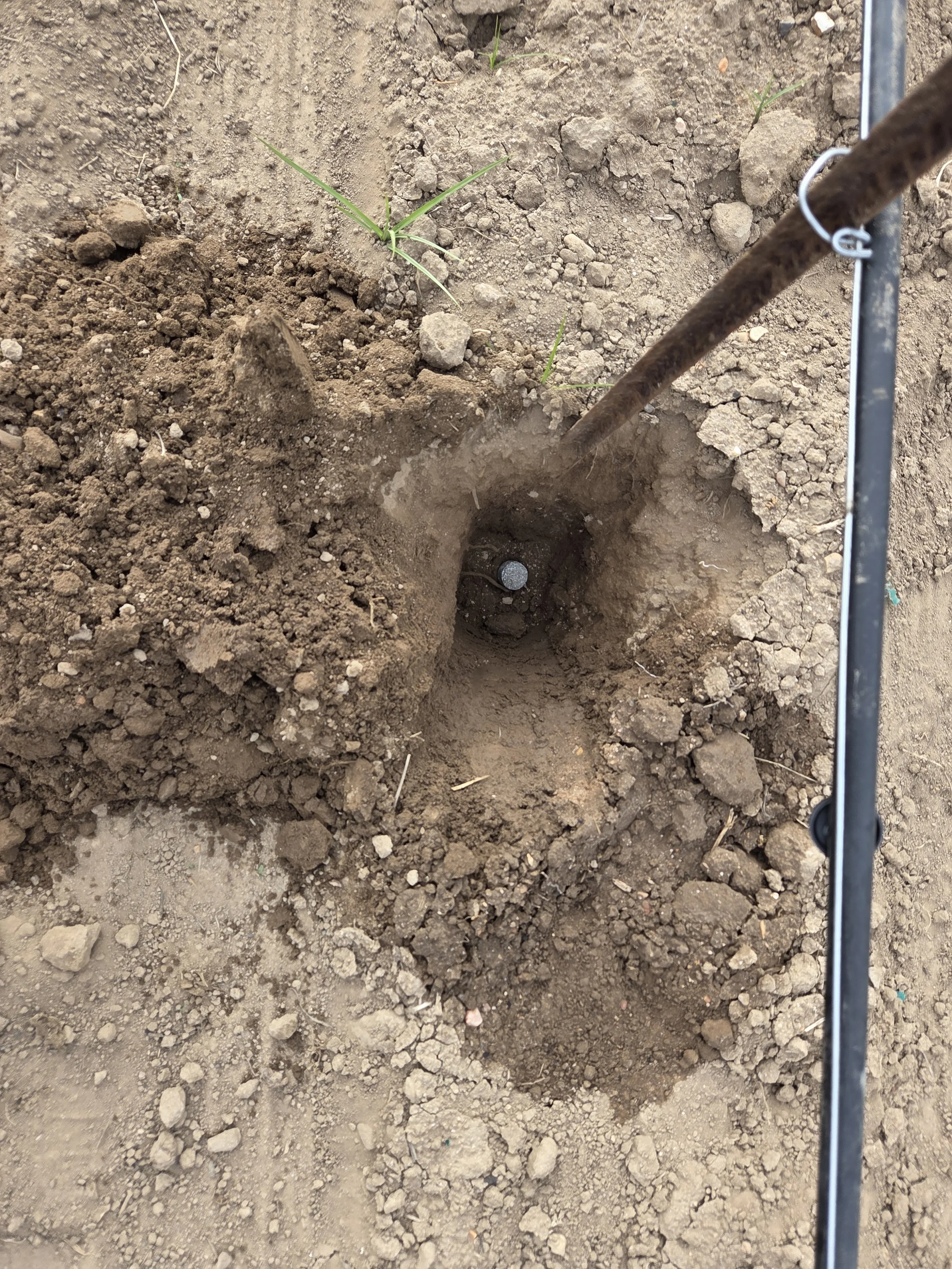
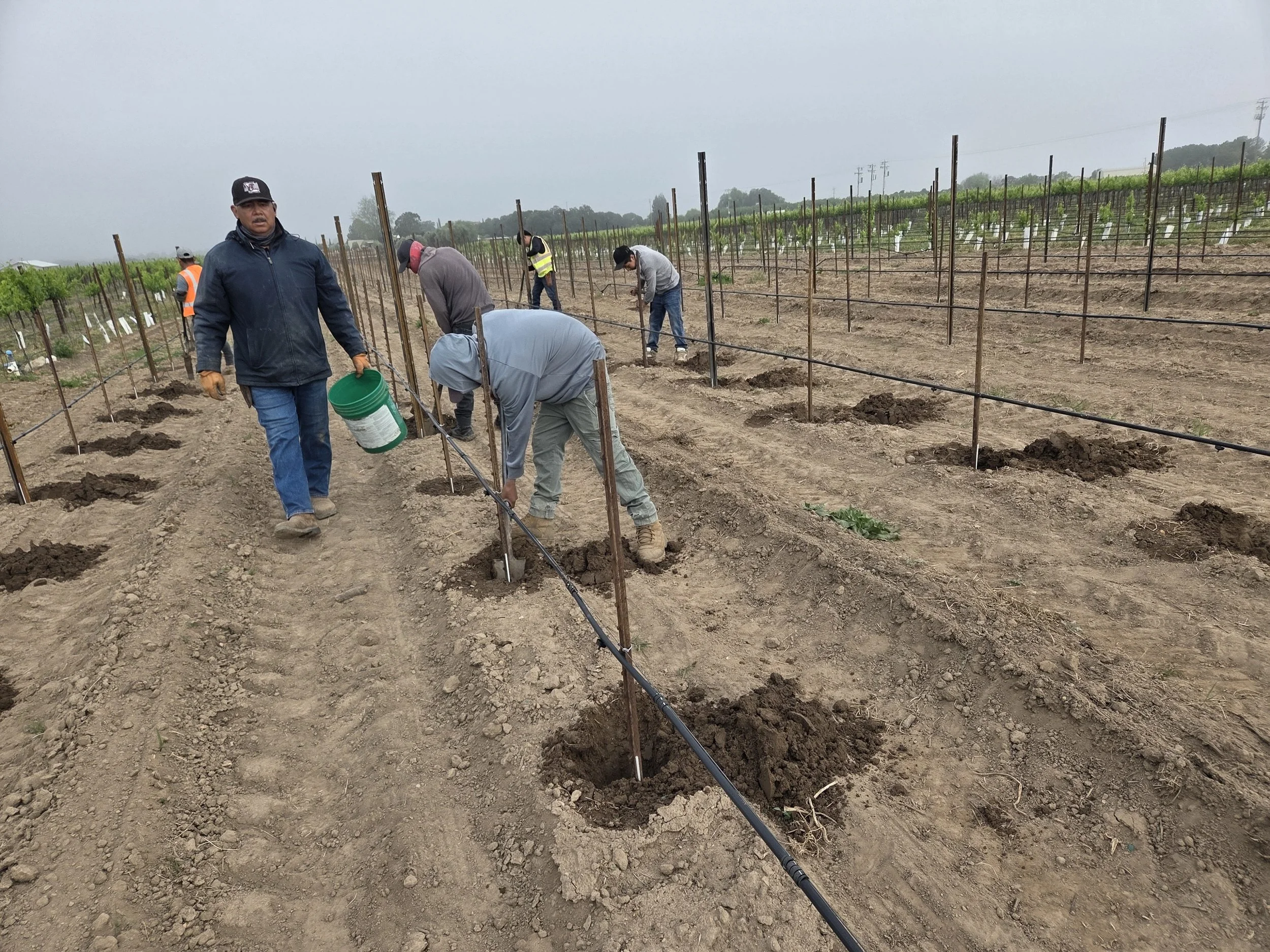
Preparing the vineyard rows is the next step. The layers of soil beneath the surface are “ripped” to loosen the compaction and eliminate weeds. Stakes are driven into the ground to support the vines, and “straw” markers are placed to indicate planting locations. Wire is stretched low along the rows to support the drip irrigation system. The field is watered overnight to soften the soil. The following day, crews dig holes, place fertilizer pods, plant the canes, and install protective tubes to shield the young vines from pests and environmental damage. After planting, patience is essential. With water, sunshine, and plenty of care, new vines will emerge ready to give us their fruit in the years to come.
Cover Crop
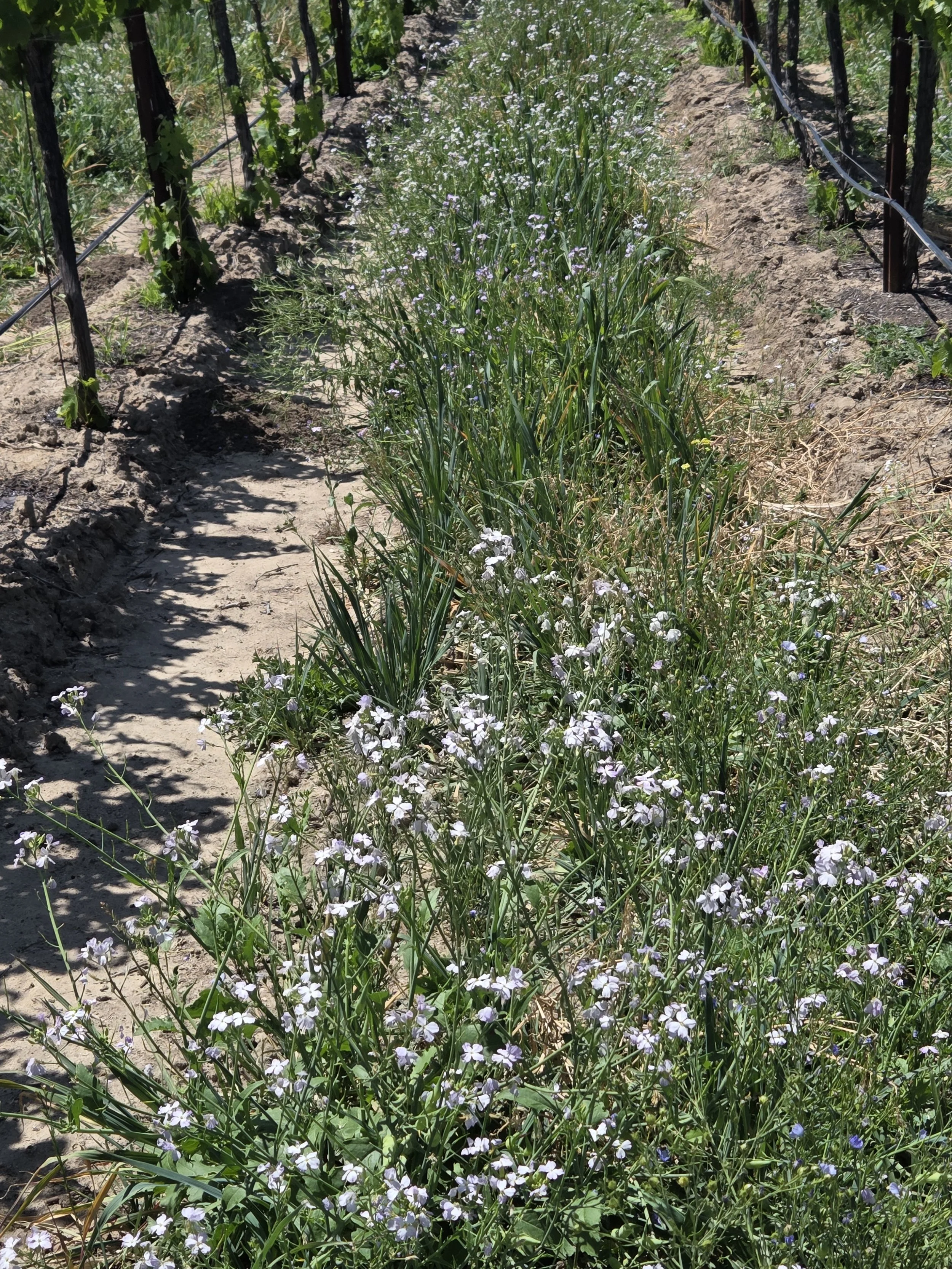
One of the most important parts of any vineyard project is being a good steward of the land. Le Vigne Winery’s vineyards are CCSV-certified sustainable, meaning we follow strict sustainability practices in vineyard management. We do not use synthetic chemical additives and must demonstrate yearly improvements to maintain certification. Sustainability is always a work in progress, and we remain committed to preserving the land for future generations.