
How Rosa Maria Traditional Méthod Rosé Sparkling Wine is Made
On Mother’s Day, Le Vigne released our first vintage of traditional-method Paso Robles Estate rosé sparkling wine, called Rosa Maria. Since then, the response to the wine has been excellent, but we have had plenty of questions about how it was made. Here’s my attempt to explain this exciting new wine without getting incomprehensibly geeky. We’ll see how that goes.
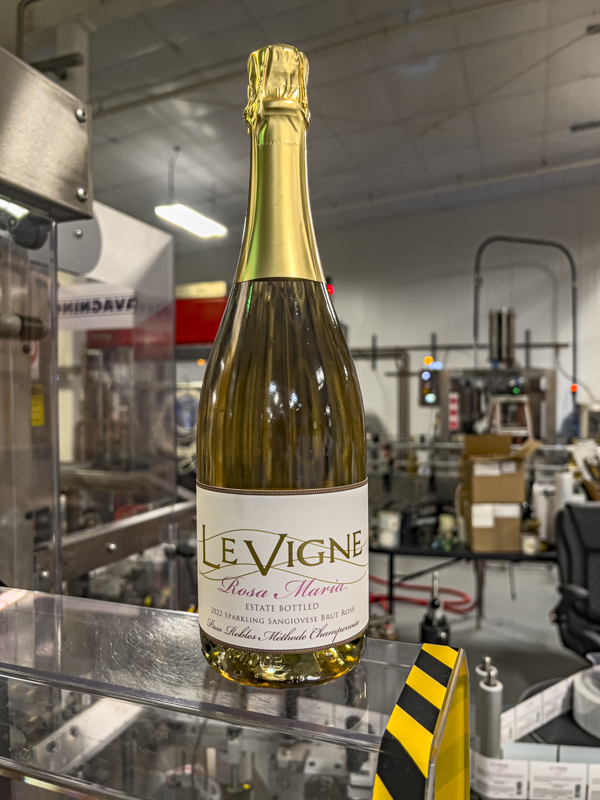
In the beginning is the vineyard.
Everything at Le Vigne starts in the vineyard. It’s impossible to make great wine from bad grapes. The grapes for the Rosa Maria were grown in our Acquarello Vineyard along with all our other Sangiovese grapes.
The 2022 vintage was surprisingly small due to a two-week-long heat spike followed by a freak rainstorm. Canopy management was key in protecting the clusters from sunburn, and sugar levels were reached before any potential problems rain could bring.
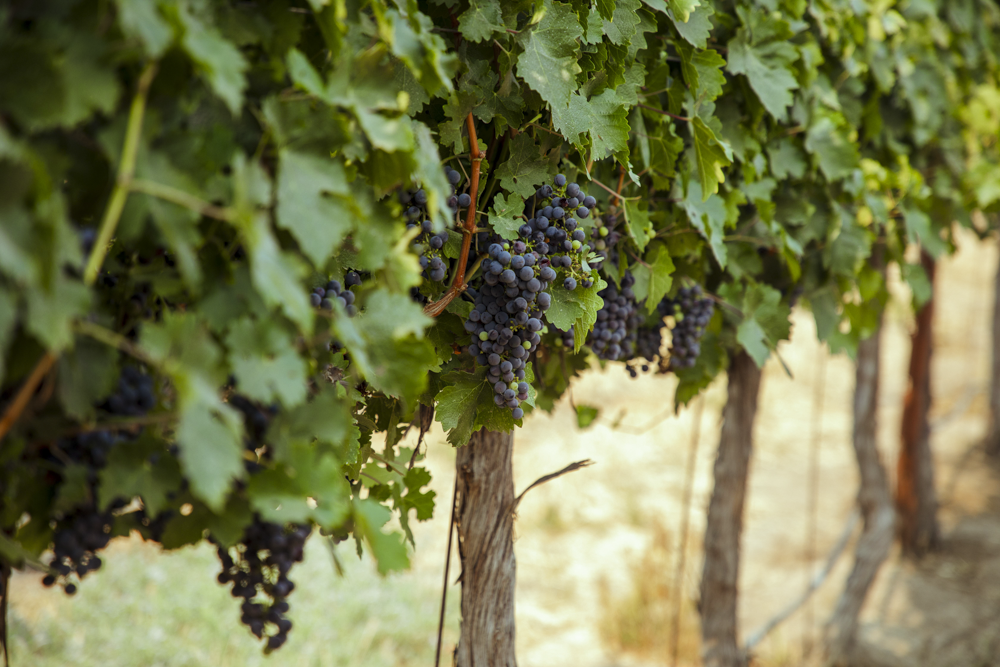
The Sangiovese for Rosa Maria was picked early in September, before any other grapes in the vineyard. The Sangiovese grapes for the traditional still rosé weren’t picked until October, with the Sangiovese intended for a traditional red wine picked in mid to late October.
What does that mean? It means that the grapes weren’t what we normally think of as ripe and balanced. Instead, they were picked early to retain high acidity. As grapes ripen, they increase in sugar and decrease in acidity. We didn’t want a fruity 14% alcohol wine. We wanted a very lean, low-alcohol base wine with low alcohol.
The grapes were carefully picked by hand in clusters. This meant that the skins wouldn’t break and give red color to the wine.
Vinification: how it became wine.
The grapes were gently whole-cluster pressed. That just means that the bunches of grapes were put into the press, and the minimum pressure possible was used to get the juice out without extracting tannins or color.
The juice was fermented at cool temperatures in a stainless-steel tank. The resulting wine is called a vin clair (French for clear wine). That’s the basis for all Champagne and Champagne méthod sparkling wine. You wouldn’t want to drink it, though. It’s intensely tart!
Stage 2: Transformation.
The vin clair was then put into bottles. A slurry of a small amount of sugar, yeast, and wine was added to each bottle and then they were sealed with a crown cap (like a beer cap). That’s when the magic of traditional method sparkling wine began.
The yeast woke up in the bottle and started eating the sugar. When that happens, there are 3 byproducts. The most common one we know about wine making is alcohol. This increased the alcohol content of the wine to about 12.5%. The second is heat. That can be an issue in the wine-making process and is one of the reasons that our tanks are temperature-controlled. The 3rd byproduct is CO₂, the bubbles in the wine! The CO₂ dissolves in the wine waiting to be opened. It has been estimated that a standard bottle holds about 9 grams of dissolved CO₂, which converts to over 5 Liters of gas upon opening. This produces an estimated 20 million bubbles in every bottle! That’s why there is so much force when a Champagne bottle is popped and why it foams so much when poured.
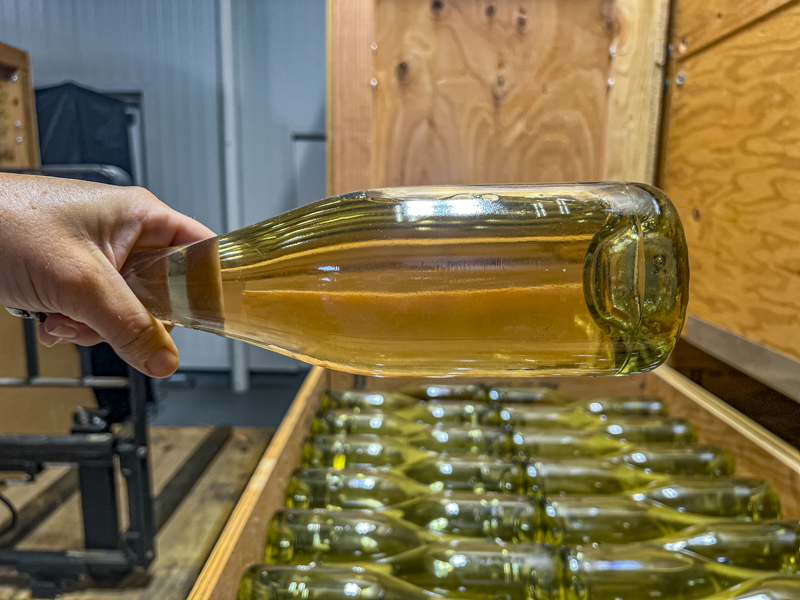
Now we had a sparkling wine, but it still wouldn’t be that exciting to many wine drinkers. Once again, yeast comes to the rescue. Most of the time, the dead yeast lees are racked off the wine (not always, of course). That can’t happen here, because the bottle is sealed. Over time, the dead yeast cells go through a process called autolysis. This literally means “self-digestion,” which sounds awful, but tastes great. As the yeast cells essentially eat themselves, the cell walls break down and release amino acids and enzymes into the wine that slowly produce the creamy, toasted bread, and brioche notes that make great sparkling wine so amazing. The longer that the wine is on lees, the more complex it becomes with layered texture and greater weight on the palate. It is generally accepted that it takes 15-18 months for the autolytic notes to become very noticeable. Our Rosa Maria traditional méthod sparkling rosé spent 36 months on lees, which gives it such a complex and delicious flavor.
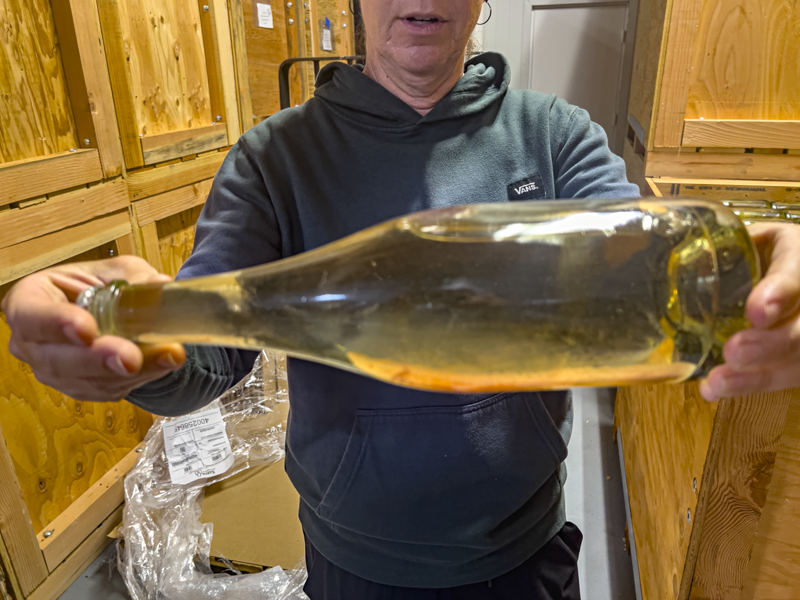
While this is happening, the bottles are slowly turned (or riddled) so that the wine is eventually standing upside down or “sur pointe” with the neck facing down. The dead lees collect in the neck of the bottle by the cap.
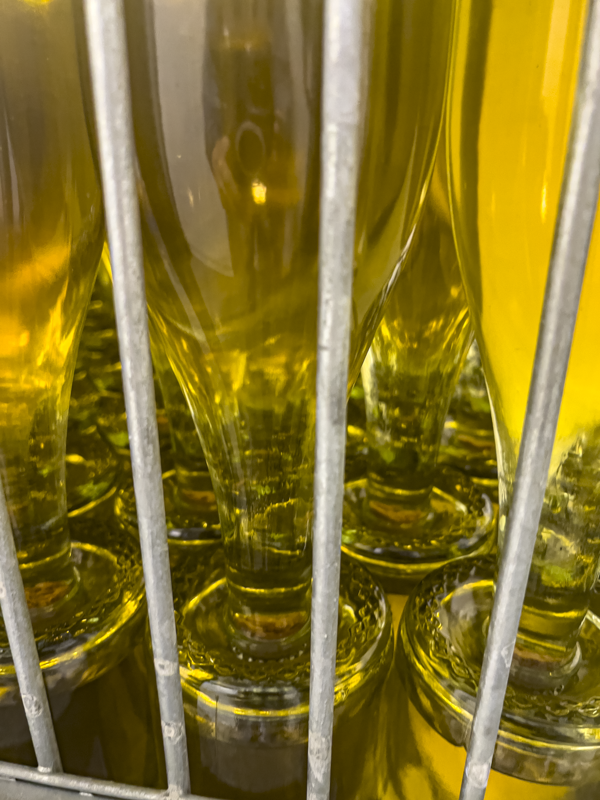
Stage 3: Disgorgement.
When it is time to release the wine, there is a final step. It’s time to get rid of the dead lees. The neck of the bottle is frozen, and the crown cap is popped off. The force of the CO₂ pops out a plug of lees. The space in the bottle is quickly filled by a combination of wine for color, and a tiny amount of sugar, to give the wine balance. In this case, the wine has about 1 ½ grams per liter of sugar. Most people don’t notice sugar in wine below 5 grams per liter. It is considered a dry wine, or in sparkling wine terms, “Extra Brut”
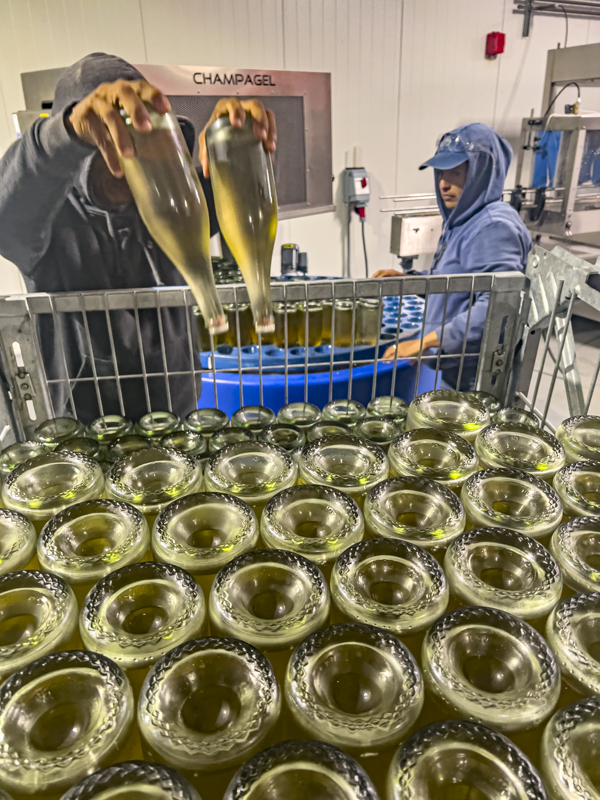
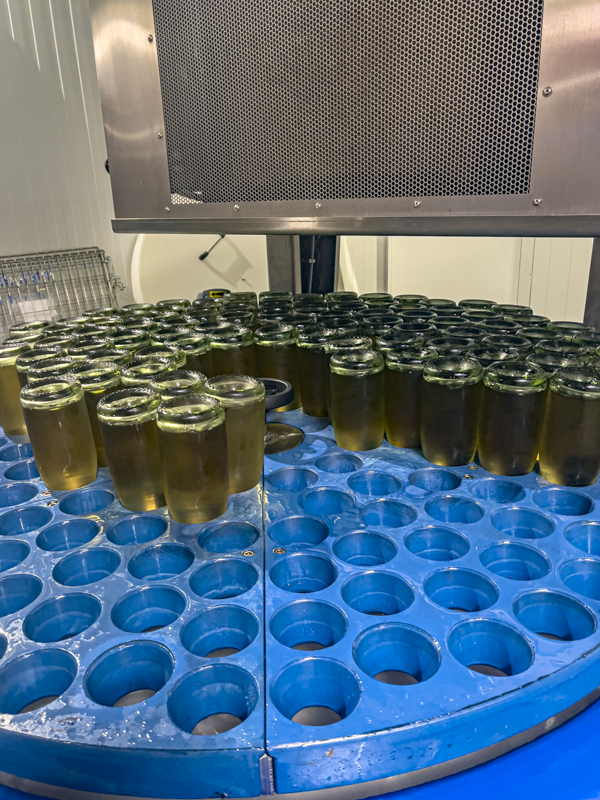
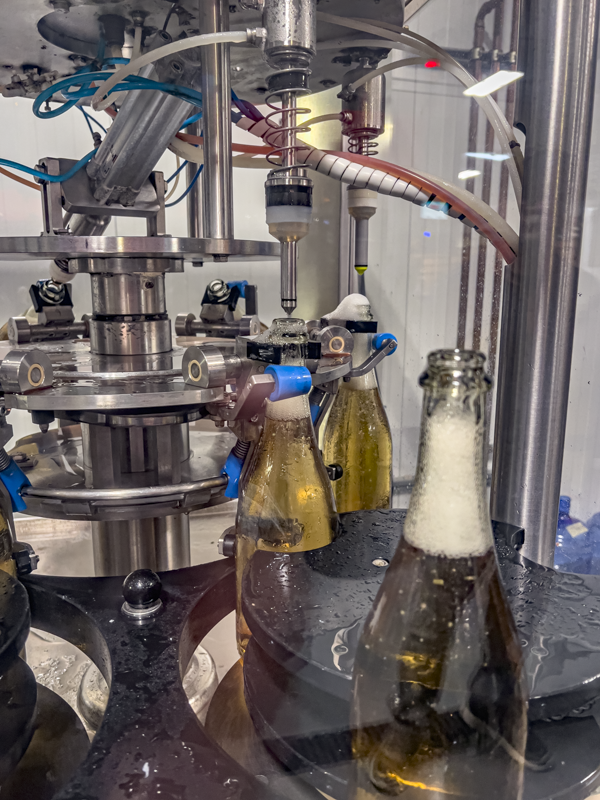
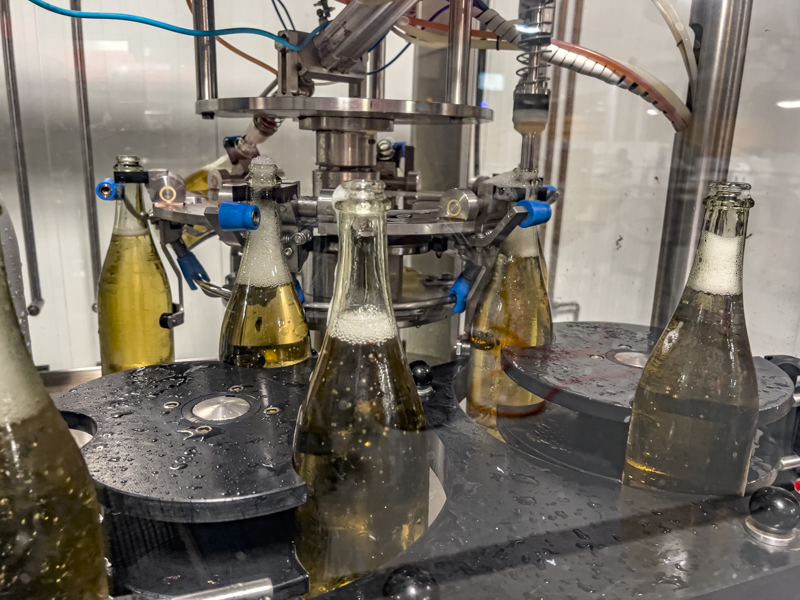
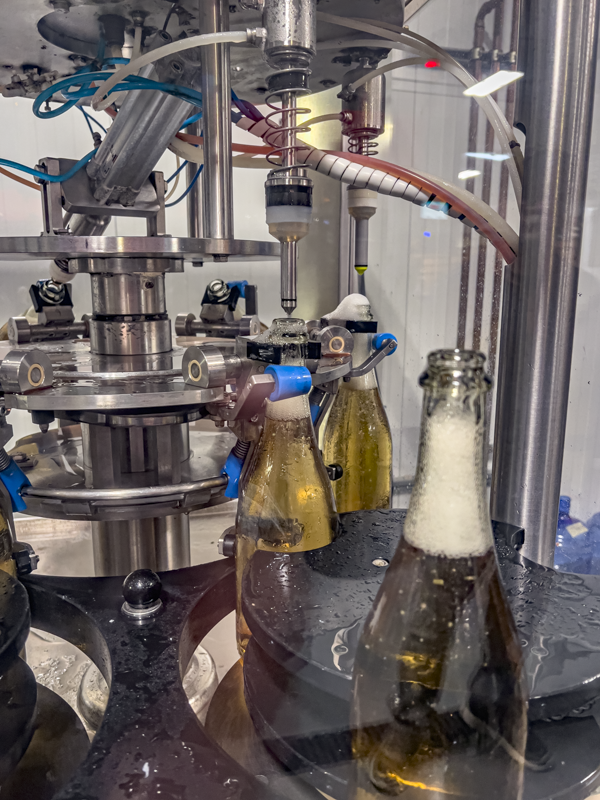
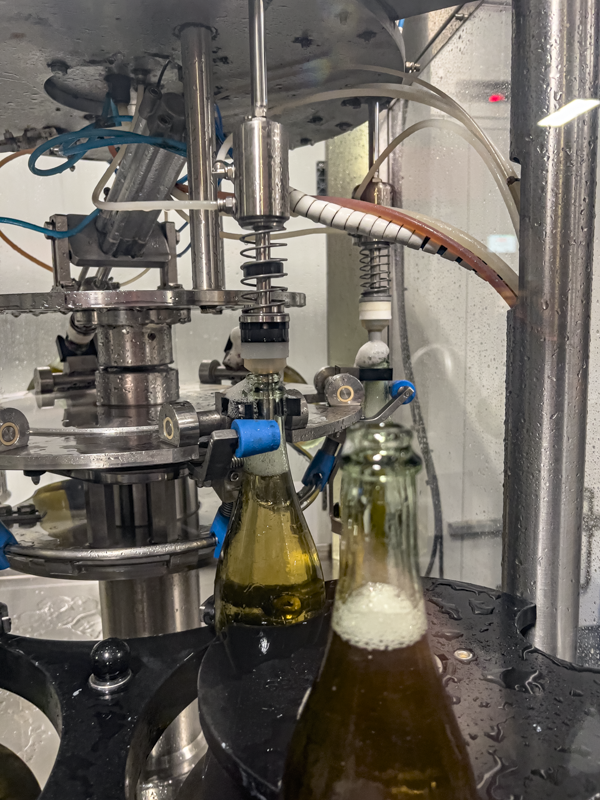
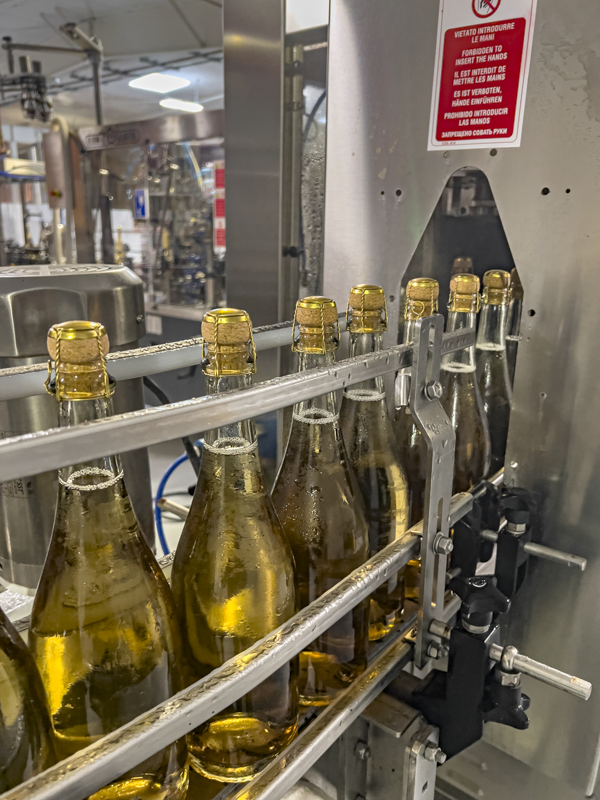
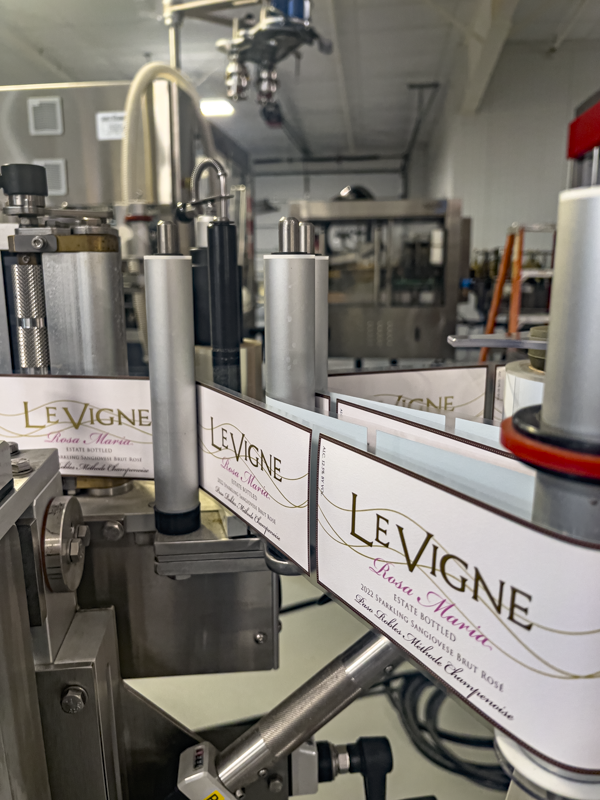
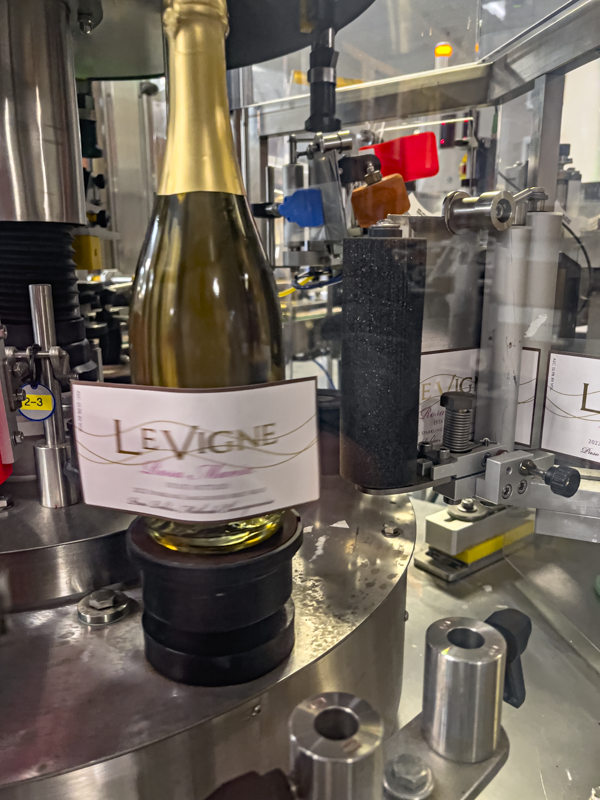
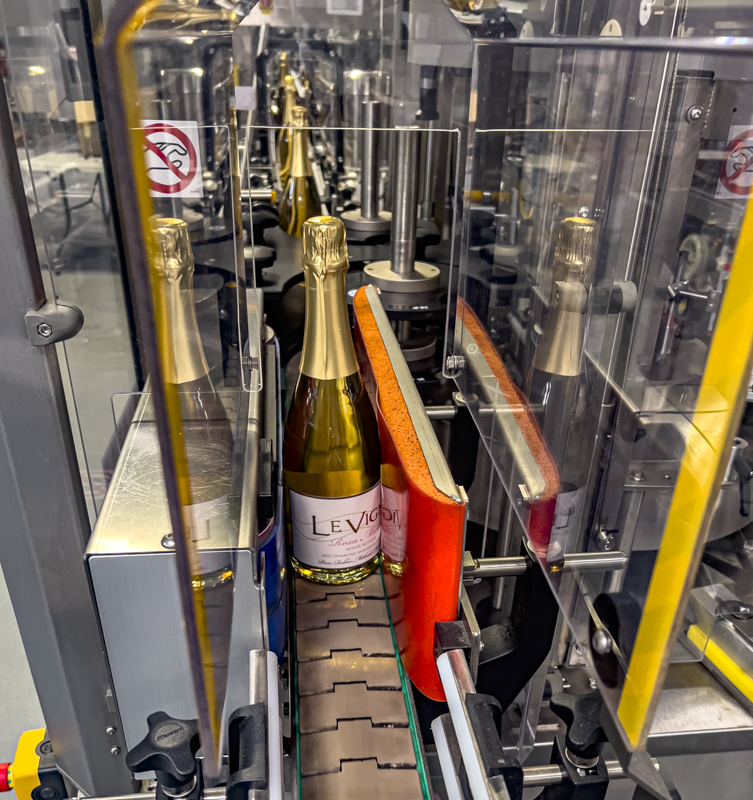
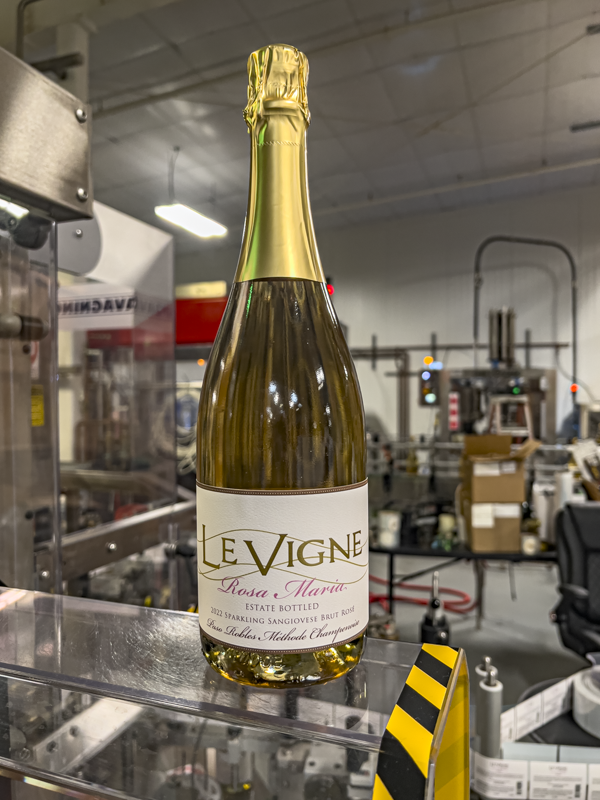
The wine is then quickly corked (all of this happens in seconds), and a cage is added to the top to secure the cork. After this, the foil is added to the top and the bottle is labeled.
Stage 4: Time to drink!
After that, the wine is ready to drink. While some people like to age sparkling wine, most of the positive changes in the wine occur while it is aging on lees. This 2022 Rosa Maria will last for many years due to the high acidity, but it is perfect to drink now.
You can pair Rosa Maria Sparkling Rosé with a wide variety of foods thanks to its complexity. Traditional recommendations would include oysters, crab, lobster, salty cheeses & charcuterie, & sushi. Two fun alternatives to try it with are fried chicken, especially extra crispy Korean fried chicken, and popcorn. Sparkling wine doesn’t have to be served with something expensive. It also doesn’t need to wait for a special occasion. Opening a bottle of Rosa Maria helps make any occasion special.

Here are a few answers to frequently asked questions…
Q: What is Rosa Maria?
A: Rosa Maria is a traditional method or Méthode Champenois sparkling wine from Paso Robles.
Q: Why is it called Rosa Maria?
A: Maria is a family name for both owners. Sylvia Filippini’s mother was named Maria. Walter Filippini’s grandmother was also named Maria.
Q: From what grape(s) is Rosa Maria made?
A: Rosa Maria is made from Sangiovese grapes grown in Le Vigne’s Acquarello Vineyard.
Q: Why are grapes for sparkling wine picked early?
A: The grapes for sparkling wine are picked early to preserve acidity in the wine and to keep initial alcohol levels low.
Q: What does “traditional method” mean?
A: Traditional method in sparkling wine means that the CO2 bubbles are naturally created in the bottle through a second fermentation.
Q: Is Rosa Maria dry or sweet?
A: With a dosage of only 1.5 grams per liter of sugar, Rosa Maria is dry. It is dry enough to be classified as Extra Brut.