
The Most Complex of Simple Questions
By Enologist, Michelle Zentmyer Moss
Is 4 the same 4 for everybody?
Are all sevens equal?
What color is the scent
of the blue weeping of violets?
— Pablo Neruda, The Book of Questions
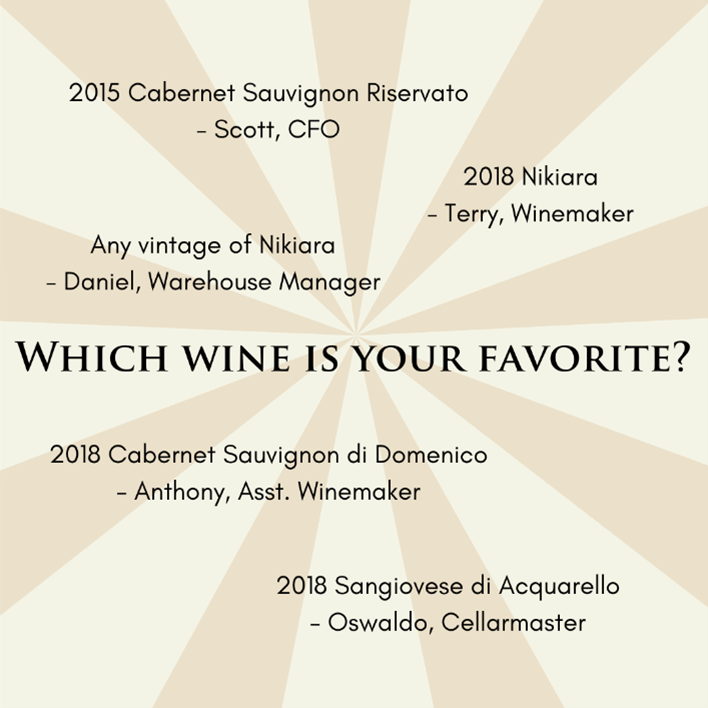
In the tasting room, one of the most common—and deceptively simple—questions we hear is:
“Which wine is your favorite?”
If you've ever asked it, you may have noticed the pause. A glance upward. The thoughtful “hmm” that follows. In those few seconds, the question spins through a mental vortex of possibilities. Because the truth is, what seems like a straightforward inquiry often opens up a sea of other questions.
What do you mean by favorite?
Favorite Le Vigne wine on today’s tasting flight?
Favorite of all time, across all vintages?
Favorite for this season, this meal, this mood?
Favorite wine that hasn’t even been bottled yet?
And then: What about my most memorable wine? The one that marked a celebration, a loss, a turning point? What would I want to drink right now—in this light, with this weather, with this company?
Ask me on a different day, and you may get a different answer. Because great wine is never just about what's in the bottle—it's about the moment that surrounds it.
Take one, for example. I can still taste an Australian Semillon–Sauvignon Blanc blend I sipped nearly a decade ago at Opera Bar in Sydney. I don’t remember the vintage or producer. But I remember the sparkling harbor, the silhouette of the bridge, the cruise ship unloading travelers, the laughter of friends. The wine was refreshing, the view unforgettable, and that moment stitched itself into the fabric of my wine-loving life.
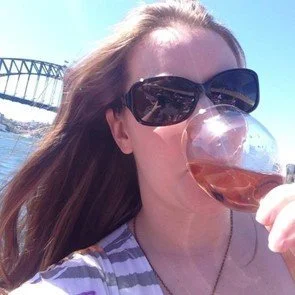
Michelle, many years ago, in front of the Harbour Bridge with a glass of wine
what’s my favorite wine today?
Right now, I’d say the 2020 Rosé of Sangiovese. It’s a coincidence—though a timely one—that this Sunday happens to be International Rosé Day. But this bottle is more than fitting for the occasion; it’s a testament to care, craft, and visSo… ion.
The Art of Rosé: Method Matters
Rosé wines are typically made in one of two ways:
Direct Press or the Saignée Method.
Direct Press involves harvesting red grapes slightly earlier—when acidity is bright and sugars are restrained. The grapes are gently pressed, separating the juice from the skins immediately. That juice is then fermented to produce a delicate, crisp rosé.
Saignée, meaning “to bleed,” is a byproduct of red winemaking. Grapes are crushed, and some of the juice is “bled off” from the tank before fermentation to intensify the remaining red wine. Rather than discarding that juice, some winemakers use it to create rosé.
At Le Vigne Winery, we opt for the direct press method for our Rosé of Sangiovese, sourcing fruit from our Acquarello Estate Vineyard. We harvest at three distinct intervals for sparkling, rosé, and red programs. Rosé grapes are picked at their peak for this style—ripened just enough to deliver vibrant aromatics and lively acidity.
From there, the fermentation process is guided with a classic, old-world approach. A specially selected yeast enhances tropical fruit and varietal nuance. Temperature, sugar conversion, and flavor development are meticulously tracked—often multiple times a day. Fermentation isn’t just science; it’s a living, breathing conversation with nature, and no two are ever the same.
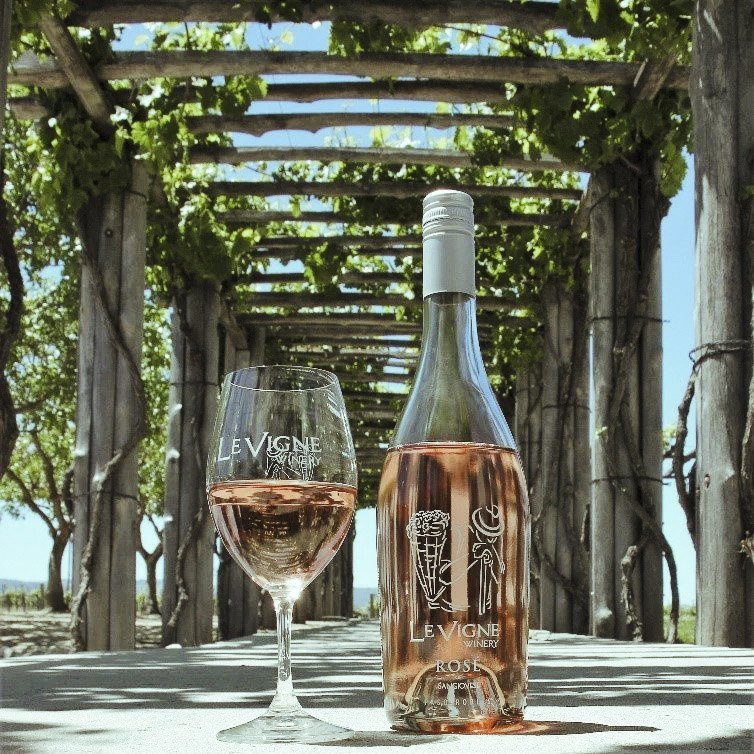
Le Vigne Winery 2020 Rosé of Sangiovese
Recognition & Resonance
Our 2019 Rosé of Sangiovese earned a Double Gold from the Sunset International Wine Competition, along with Editor’s Choice from Wine Enthusiast. The 2020 vintage followed suit, garnering Gold at the Drink Pink Vino International Rosé Competition.
But even more rewarding than awards are the comments we hear in the tasting room:
“This is the best rosé I’ve ever had.”
“I don’t usually like rosé, but this one’s incredible.”
That kind of feedback—unexpected, honest, delighted—is what every winemaker dreams of.
Favorites Are Fluid
Of course, the Rosé isn’t my only favorite. Other bottles that have left a mark on me include:
2012 Nikiara
2013 Heritage Series Cabernet Sauvignon
2015 Merlot
2017 Zinfandel
2019 Barrel Select Chardonnay (a sentimental one—bottled the day my son was born)
There are more. There always will be. Because wine, like memory, evolves with us.
As one anonymous wine lover once said:
“The best wine in the world is the one you’re enjoying in that moment.”
Here’s to this moment—and to many more worth raising a glass to.