
The Quiet Race That Shapes the Vintage
By Winemaker Ben Mayo
Snip, snip, snip. The race starts as soon as the frost appears. It’s a race against rain, mud and nature. Time to prune. Pruning is arguably the most important vineyard activity and timing is everything. The vines need to be dormant so that disease will not enter the prune wounds. Pruning sets the crop for harvest, and the health and longevity of the vines. Small armies of highly skilled pruners swarm Le Vignes vineyards, cutting canes and arranging vines for next season’s growth. As the soil slowly warms, the increasing temperature sends a message deep into the vine, nudging it to awake and urging it to grow once again.
First, some pruning definitions:
Cordon - the trained horizontal vine attached to a wire.
Spur position - the placement of the spur on the cordon.
Spur - the nub which the cane grows out of.
Shoot – a beginning growth of a cane
Cane - the branch that grows out of the vine that carries leaves and fruit.
Bud - the leafing growth that produces the grape cluster.
Canopy - the position of the canes and leaves.
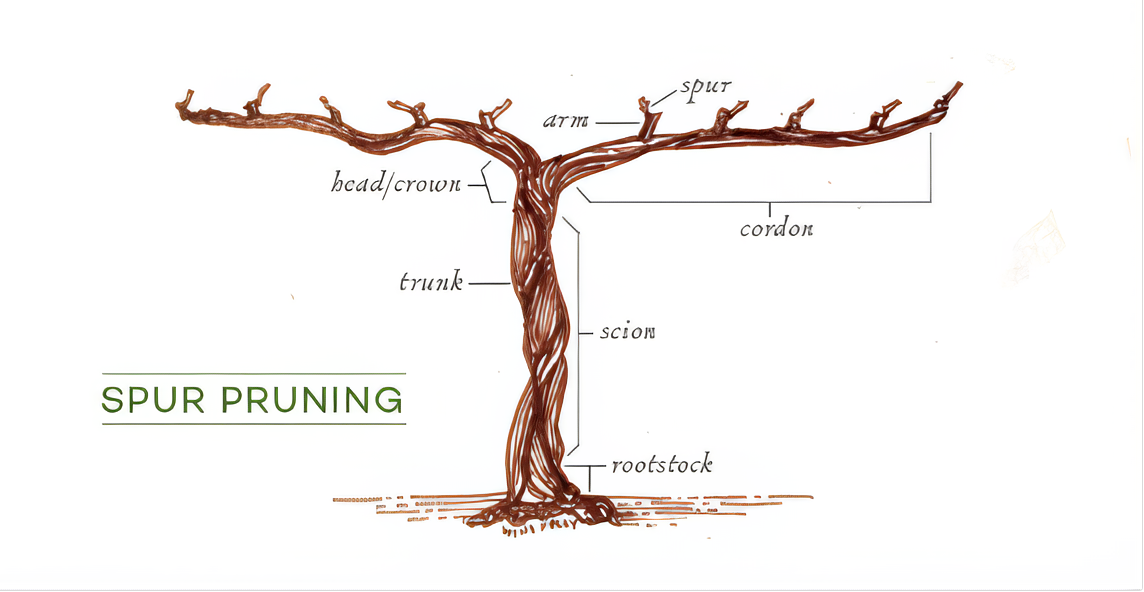
Wine Folly Spur Pruning diagram from the Illustrated Grape Vine Training Methods article by Madeline Puckette
Think of spur spacing like cars in a parking lot. Park too close, and opening a door risks damaging the car beside you. The same principle applies in the vineyard. Spurs are typically spaced about a closed fist apart along the cordon. Proper spacing allows shoots to grow upright and ensures leaves and fruit receive adequate sunlight and airflow, promoting even ripening and minimizing the risk of mold. The goal is to have a neat and tidy display of grape clusters and leaves.
Our vineyards’ more mature vines are particularly sensitive to spur length. Two buds per spur is standard, and we are rewarded with balance. One bud produces the fruiting shoot that carries the grape clusters; the other supports vegetative growth, providing the leaves that drive photosynthesis and ripening. This strategy will ensure that the vines will be able to carry fruit for many years to come.
These decisions are carefully determined by me, the winemaker, in collaboration with the vineyard manager, then executed with precision by skilled pruners.
With every cut, the next harvest quietly takes shape.
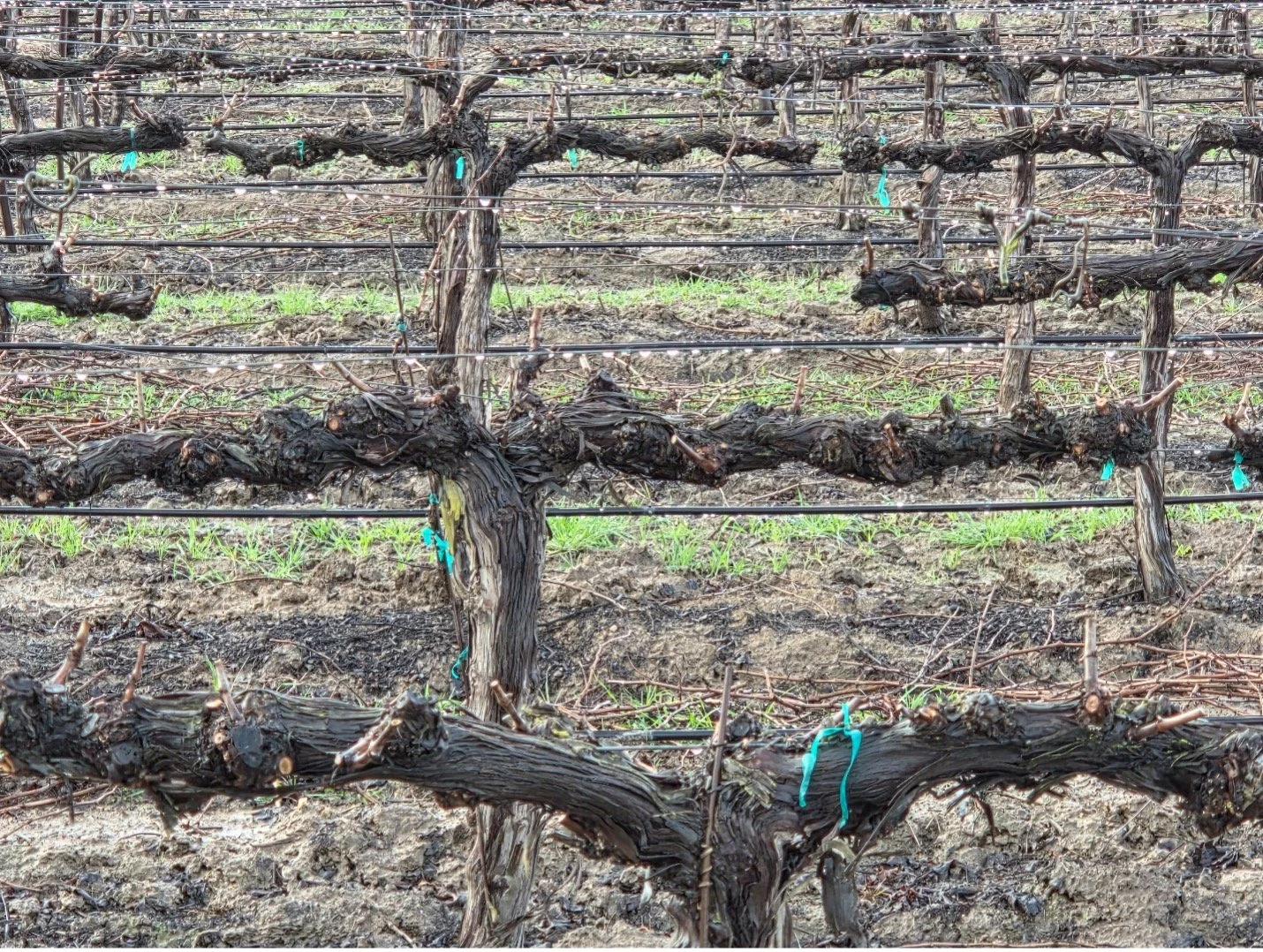
Freshly pruned Cabernet Sauvignon in Block 04 of our Domenico Estate Vineyard